








RTP Starburst: Reading And Choices 2026
Starburst is available in Italy: understand the theoretical return, plan your budget and use clear limits to play in 2026.
Understanding Starburst Slot RTP Without Illusions
The theoretical return to player is a useful concept, but it should be interpreted with a clear head. It is not a prediction of what will happen to you today, nor a promise that a big win will "eventually" come. Rather, it serves to understand how, in the long run, a portion of bets tends to return as prizes, while the platform retains a share to manage the service.
Imagine a simple situation: you have half an hour free and want to start a light session, without complicating your evening. At that moment, it's best to turn the number into a practical question: how much am I willing to spend to entertain myself? And for how long? Players usually skip this step, enter impulsively, then change pace when their balance fluctuates.
Another often misunderstood point is the relationship between theory and variability. Even with a "good" return percentage on paper, the personal outcome can be very different, because the sequence of results and the duration of the session matter. If you play little, the experience is dominated by ups and downs; if you play too much, you risk losing control. The healthiest way to use this data is to incorporate it into a plan: budget, time, and an exit rule that doesn't depend on mood.
All promotional incentive structure is clearly stated in writing and/or via electronic means in an easily understood manner. All codes are accompanied by an explanation of what the code is for, who is eligible to use the code, and how it should be used. As such, players are less likely to be confused about what is required of them in order to receive a reward and how the reward will be applied after receiving it. The promotional incentives provided to participants provide them with time to become familiar with the gaming system's mechanics, their interface, and progress, before deciding how deeply they wish to become involved with this platform. Therefore, players are encouraged to participate in an informed manner, rather than being pressured or tempted to act quickly.
Starburst In Italy: Access, Limits And Control
Starburst can be found on platforms accessible in Italy in compliance with applicable rules and with access reserved for adults. For you, this means something very concrete: before thinking about the slot, get your account and control tools in order. It sounds boring, but it's the step that separates a smooth session from an evening full of friction.
Imagine registering on the fly during a break and wanting to deposit immediately. If you haven't verified your email, phone, or essential data, you risk blocks just when you want to play or, worse, when you want to withdraw. Usually, problems don't arise from great mysteries, but from details: a name written differently, an outdated document, a skipped step.
Set limits right away that make you feel comfortable: a spending cap, a maximum duration, and maybe a reminder that forces you to stop and re-read your balance. Avoid treating limits as a punishment: they are a safety switch, especially useful when you are tired or nervous. In 2026, with increasingly faster sessions, protecting yourself with simple rules is a real advantage.
Set a Session with Rhythm and Budget
A good session doesn't come from luck, but from a sequence of repeatable choices. First, decide on the budget, then choose the stake, and finally establish how to close. It seems trivial, but it's exactly what's often missing when you play "just for a moment." If you don't define the exit, emotion decides the exit.
Imagine starting with the idea of playing a few rounds and then going to sleep. You get a small win, you feel energized, and you extend your play. Or the opposite happens: an initial loss irritates you, and you increase your stake to recover. In both cases, you're not following a plan; you're reacting. And reaction, in games of chance, is the quickest way to lose control.
Work with short rules, written in your head as if they were a sign. Like: "if I reach this spending limit, I stop" and "if I exceed this profit, I stop." Then reduce decisions during the session: the fewer choices you make, the fewer mistakes you commit.
RTP Starburst And Bankroll: Simple Rules
When you connect the theoretical return to your bankroll, you stop chasing the result and start managing the process. The most useful rule is to divide your balance into blocks, as if they were already assigned tokens. One block to start, one block to continue, and stop when they run out. This way, you won't find yourself "moving a little more" from tomorrow's budget.
Imagine you have an amount you want to dedicate to the evening. If you divide it into four parts, you already know how many times you can try, without crossing the line. Usually, players who handle fluctuations best are those who accept the session as temporary entertainment, not as a plan to make up for losses.
Another practical choice is a sustainable stake: one that doesn't make your heart pound with every spin. If the stake puts pressure on you, it's too high for your current mental state, even if "in theory" you could afford it.
Common Mistakes When Chasing Recovery
Recovery is a psychological trap, not a strategy. Increasing your stake after a losing streak might seem logical, but it often only amplifies the session's volatility and makes it harder to stop. If you notice you're changing your pace due to anger or haste, you already have the answer: it's time to slow down.
Imagine saying "I'll do two more spins and then I'll stop" and then repeating it five times. This behavior isn't about the slot; it's about the anxiety of breaking even. It's usually solved with an external rule: a timer on your phone, a spin limit, or a mandatory break after a certain point.
A concrete trick: when you feel the urge to recover, lower your stake and do a mini check-in (balance, time, emotion). If you can't do that, you're not in the right condition to continue.
60-Second Startup Checklist
Decide on a budget you can lose without regret, set a time limit, choose a comfortable stake, and establish an exit rule. Then only start if you're clear-headed, not out of boredom or nervousness.
Signs That Tell You to Stop
If you reload without thinking, if you speed up spins, if you try to "finish strong" at all costs, you're playing with emotion. A short break is often enough to break the spiral and bring you back to the plan.
Deposits and Withdrawals: Stress-Free Procedure
Payments and withdrawals are the most underestimated part, but this is where you see if you're playing in an orderly fashion. The rule is simple: consistency in data, consistency in method, and patience in checks. If you change your approach every time, you increase the likelihood of hitches.
Imagine finishing a positive session and wanting to cash out immediately. If you're in a hurry, you risk entering incorrect details, and then you find yourself chasing corrections. It's usually better to separate the moments: first you play, then - with a clear head - you manage the operations.
Also work preventively: keep confirmations, keep your contacts updated, and don't wait until the last minute to complete any required verifications.
Choosing the Payment Method Consistently
Choose a primary method and use it consistently. This isn't just convenient: it reduces friction and makes tracking operations clearer. If you're undecided, do a test with a small amount, just to understand the flow without pressure.
Imagine you're away from home and want to deposit from your phone. At that moment, you need a method that gives you control: notifications, clear confirmations, and a limit you can't impulsively exceed. Usually, the best choices are those that make you take a small "mental stop" before spending.
|
Theme |
Practical Choice |
What to Check First |
Common Sense Note |
|
First deposit |
Small test amount |
Consistent personal data |
Test the path without rushing |
|
Monthly budget |
Fixed and realistic limit |
Active notifications |
Protects against long sessions |
|
Main method |
Only one, stable |
Saved confirmations |
Fewer changes, fewer problems |
|
Withdrawal request |
Planned with a clear head |
Updated contacts |
Avoid errors due to euphoria |
|
Support |
Channel you actually use |
Details ready |
Clear messages resolve faster |
Identity Verification And Data Security
Complete verifications when you are calm, not when you are in the middle of a session. Valid documents, legible photos, identical data in each field: these details avoid additional requests. If it seems like a bureaucratic step, think of the alternative: having to do it while you are frustrated.
Imagine sending a document with poor lighting and then receiving a resubmission request. It's not a drama, but it steals your time and patience. It's usually better to prepare everything once, in an orderly fashion, and then not think about it anymore.
For security, use a unique password and, if available, a second factor. Even a small habit - like not sharing the device and locking the screen - makes a difference in the long run.
What To Expect From Processing Times
Processing times vary based on the method and security checks. Do not rely on generic promises or others' stories: they can change and depend on the specific case. The useful thing is to plan with a margin and not turn the game into a financial plan.
Imagine wanting to use the proceeds for an imminent expense: that's pressure you shouldn't add. Usually, the best choice is to consider any times as variable and keep the game within an entertainment budget.
If something remains pending, contact support with precise data (date, amount, visible status, method). An organized message speeds things up much more than ten emotional prompts.
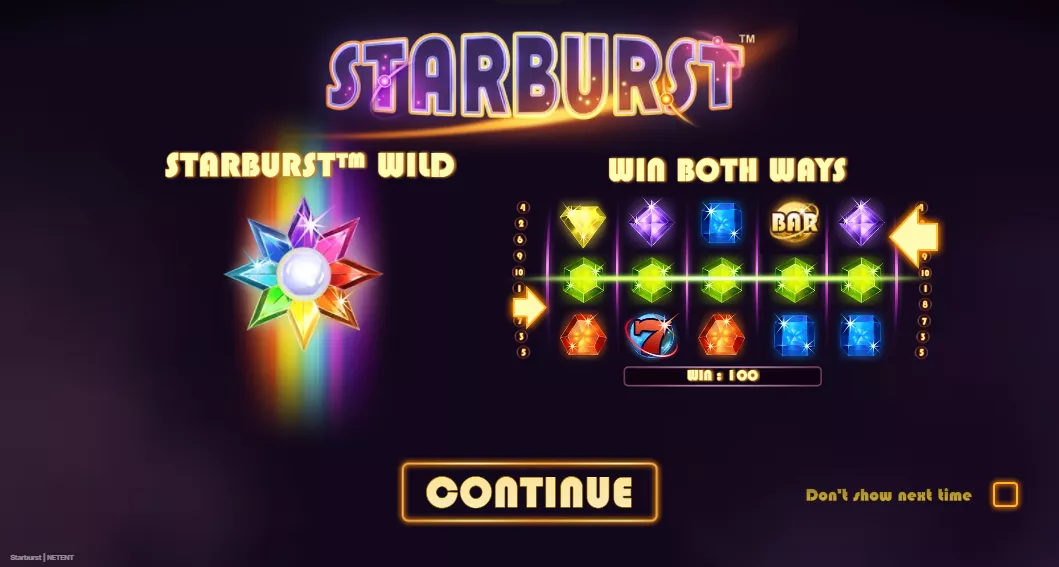
Starburst Slot Review: What to Evaluate in 2026
A useful review is not a list of adjectives, it's an evaluation method. You look at the rhythm, the clarity of the rules, and how well it fits into your playing style. In 2026, with quick sessions and decisions in a few seconds, you need a mental checklist: what do I like? what stresses me out? how much control do I have?
Imagine opening the slot after a busy day: you want something simple, not a puzzle. If you have time and want to explore, you can afford to read up on features and payouts. Usually, the mistake is choosing the same type of experience in any mood, and then blaming the game when it doesn't fit.
Always evaluate based on your goal: short entertainment, a longer session, or simple curiosity. It changes everything: stake, duration, and expectations.
Graphics, Sounds, And Speed: Real Experience
The visual and sound part is not decoration; it influences behavior. A fast pace makes you play more rounds than expected, a "rewarding" sound can push you to stay even when you should quit. If you want control, adjust volume and speed so you don't get carried away.
Imagine playing while talking to someone or watching TV. In that context, it's easy to lose track of rounds. It's usually better to choose a slower pace and take short breaks, so you immediately notice if you're going over your plan.
If you feel that the graphics irritate or tire you, don't force it. Changing the game or quitting is a better choice than "resisting" on principle.
Functions, Symbols, And Payouts: Practical Reading
Before you really start, spend a minute to understand what triggers prizes and how any features work. You don't need to memorize everything: you just need to know which events are rare and which are more frequent. This reduces disappointment and impulsive choices.
Imagine expecting continuous action and instead finding a more linear pace. If you don't know, you might react by randomly increasing your bet. This is usually avoided with one simple habit: reading the prize structure and deciding if you like it before investing time and budget.
When trying a slot, start with small bets. If the game convinces you, then - and only then - can you think about a more structured session.
How To Try The Slot Without Complications
Testing means a controlled test, not a marathon. Choose a small budget, set a timer, and make enough spins to see if you like the pace. Then close and evaluate. If you feel compelled to "give it another chance," stop: you're moving from testing to chasing.
Imagine you only have ten minutes. Instead of immediately looking for the big win, use those minutes to understand: does it entertain me? does it bore me? does it make me speed up? This approach usually saves more money than any trick.
If you want to be even more rigorous, note three things at the end of the test: duration, expenditure, and emotional state. Over time, it becomes a powerful filter.
When To Stop: Stop Win, Stop Loss, Timeout
The exit rule must be decided beforehand, because perception changes during the session. A stop loss protects against tilt, a stop win protects against euphoria. And the timeout is the emergency brake: it takes away the option to continue when you're not clear-headed.
Imagine making a good profit and thinking "I can push further." That's exactly where many give everything back, because confidence grows and limits dissolve. A simple rule usually works: once the set point is reached, close without negotiating.
If you often go over budget, don't blame yourself. Change your structure: shorter sessions, lower limits, mandatory breaks. Discipline is not a talent, it's a procedure.
Responsible Gaming Assistance And Tools
When help is needed, the quality of the information you provide makes the difference. And when protection is needed, concrete tools make the difference: limits, breaks, temporary exclusion. These are not just words, they are operational levers.
Imagine a simple problem, like an operation that doesn't appear immediately or a setting you can't find. If you write unclearly, you get confused answers. Support usually works better when it receives clear data, and you feel less helpless because you're guiding the conversation.
For responsible gaming, one principle applies: if you notice you're playing to change your mood, use a break. It's not a failure, it's a reset. In 2026, the speed of sessions makes these choices even more important.
How To Write To Support Effectively
Start with the facts: what happened, when, what amount or action was involved, and what you expected. Then add the state you see and what you've already tried. This reduces steps and shortens times.
Imagine writing only "it doesn't work." They'll ask you questions, you'll waste time, you'll get annoyed. Usually, a small, ordered list is enough to change everything: date, operation, method, status, request. If the answer remains vague, ask for the next step directly: "what verification is missing?" or "what setting should I change?".
And if you feel like you're writing in anger, stop for a minute. A calm message gets you better results.
FAQ
What does the return to player percentage mean?
It indicates, theoretically and over large numbers, how much of the bets tend to return as prizes in the long run, while a portion remains with the service provider. It doesn't tell you what will happen in your single session, nor does it guarantee recoveries "sooner or later." Imagine playing for only a few minutes: in that case, oscillations and the sequence of outcomes matter most. To use it well, treat it as contextual information and build a budget and duration plan, so your experience remains under control even when the balance rises or falls.
How can I manage my budget without ruining my evening?
Decide beforehand how much you want to spend on entertainment and divide it into blocks, as if they were separate tokens. When a block ends, take a break; when the planned blocks end, close without negotiating. Imagine starting tired after a heavy day: it's easy to extend and reload impulsively. Usually, an external timer and a simple exit rule work, because they prevent you from making hasty decisions. If you feel the urge to recover, lower your bet or stop: control is worth more than one more spin.
What steps should I take before depositing?
First, check your contacts, set a strong password, and activate any available security options. Then, set spending and time limits, so your deposit stays within a clear perimeter. Imagine depositing in a hurry from your phone: a limit protects you from "just a little more." It's usually a good idea to also do a test with a small amount to understand the flow, save confirmations, and keep personal data consistent, because many hitches arise from details entered differently.
How do I know when it's best to take a break?
When you notice signs of automatism or tension: faster spins, bets increasing out of anger, a desire to "finish well" at all costs. Imagine repeating the phrase "last spin" and then continuing: that's a warning sign. Usually, a short break breaks the spiral and brings you back to your plan. If it happens often, use stronger tools like lower limits or a timeout: it takes away the choice when the choice is difficult.
What should I write to support to get quick answers?
Write as if you were filling out a form: date and time, operation or function involved, amount if any, method used, status you see, and expected result. Then add what you've already tried. Imagine sending only "it's not working": they'll ask questions and everything will take longer. An organized message reduces steps and makes you feel more in control. If the answer is generic, ask for a concrete action: "what's the next step?" or "what information is missing?".
Can I try the game without getting complicated with too many rules?
Yes, just reduce the trial to a short, controlled test. Set a small budget, set a timer, and play enough rounds to see if you like the pace, then close and evaluate with a clear head. Imagine you have ten minutes: instead of chasing a result, observe how you feel and how quickly you use up your budget. This approach usually avoids involuntary marathons and helps you make a clearer choice about whether to spend time on the slot at another time.